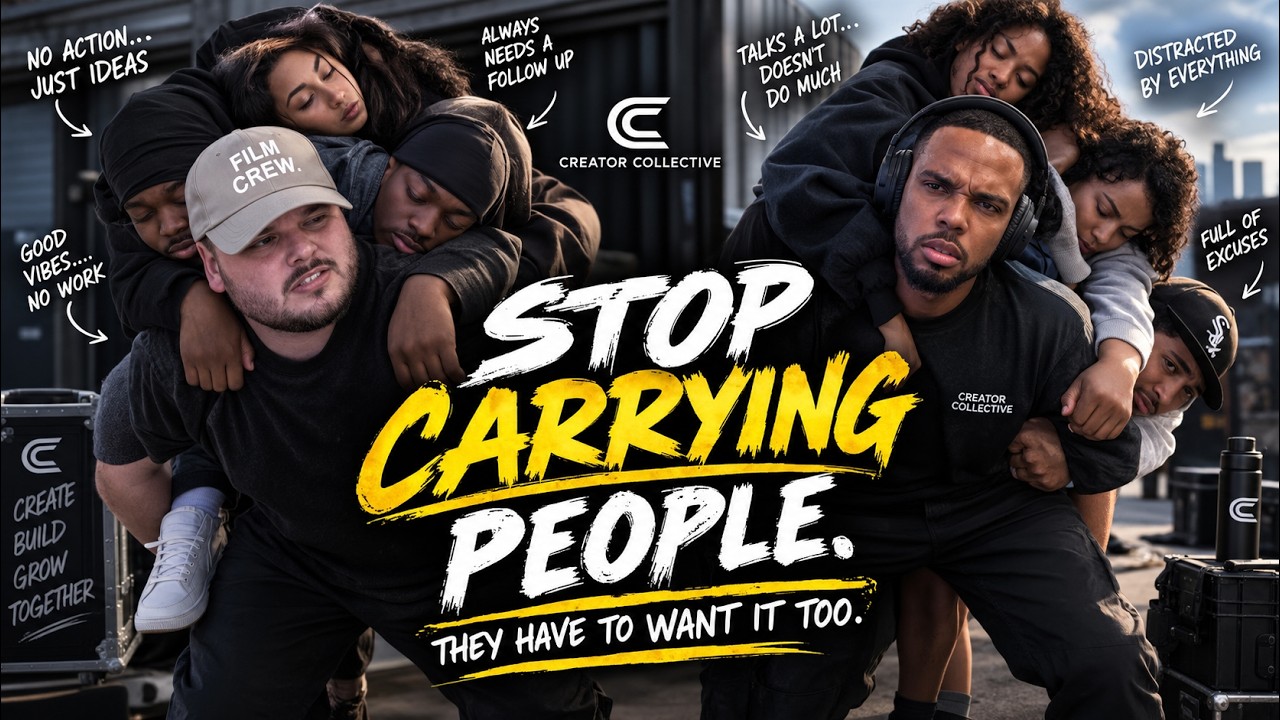
There is a kind of effort that looks like excellence and functions like self-harm. You rewrite their brief. You chase the lead who will not book a call. You carry a collaborator who likes the idea of a company and will not do the work of one. You want the win more than they do. Cody and JB name that trap directly on Creator Collective: you cannot want success for someone more than they want it. You can prepare. You cannot cross the threshold for them.
Preparation is yours. The decision is theirs.
Luck, in the useful sense, is preparation meeting an opportunity. You control the first half. The reel is current. The price is written. The kit is packed. The follow-up exists. When the opportunity shows up, you are not inventing a business in the parking lot. That is the creator’s side of the ledger. The other side is theirs: the client has to want the film, the partner has to want the company, the lead has to want the call. If you are the only person pushing, you are not selling. You are volunteering.
This is why some “almost” clients exhaust a studio. They love the mood of the work and will not choose a date, a budget, or a single decision-maker. Match their energy. Answer once, clearly, with the scope and the number. Then wait. A second thoughtful note is professional. A fifth note is you wanting the job more than they do. The checklist in how to choose a videographer is what a serious buyer uses. If they will not use anything like it, they are not ready to hire.
Do not outwork a partner who will not move
Collaboration fails the same way. You book the room, build the deck, and carry the group chat while the other name on the project stays inspirational. Wanting the company more than your partner is how resentment gets a logo. Name the work. If it is not shared, the project is a solo project and should be priced and staffed like one. Passing an opportunity to someone who will actually do it is healthier than dragging someone who likes the credit.
You can hold the door. You cannot want their business more than they want their business.
Care is not the same as carrying
None of this is an argument for indifference. The work should be cared for. The client’s problem should be understood. The difference is ownership. You own the picture, the plan, and the standard. They own the decision to proceed, the access you asked for, and the internal politics you cannot attend. When those stay on your desk, the job gets heavier and the film gets worse, because you are guessing instead of being directed. A clean no protects the next yes.
Practical takeaways
- Be ready before the opportunity. That half of luck is the only half you control.
- Send a clear scope and a number. Do not send five follow-ups to a silent lead.
- If you are the only person who wants the project, it is not a partnership.
- Pass work to people who move. Dragging a reluctant name helps no one.
- Care about the craft. Refuse to carry someone else’s decision.
A direct next step
Look at the open threads in your inbox. Which ones are waiting on you, and which ones are waiting on them? Finish yours this week. Leave theirs alone. That single sort will show you where the business actually is. The episode with Cody and JB goes further. The room is Creator Collective.
Tags: boundaries, sales, collaboration, creator mindset, clients