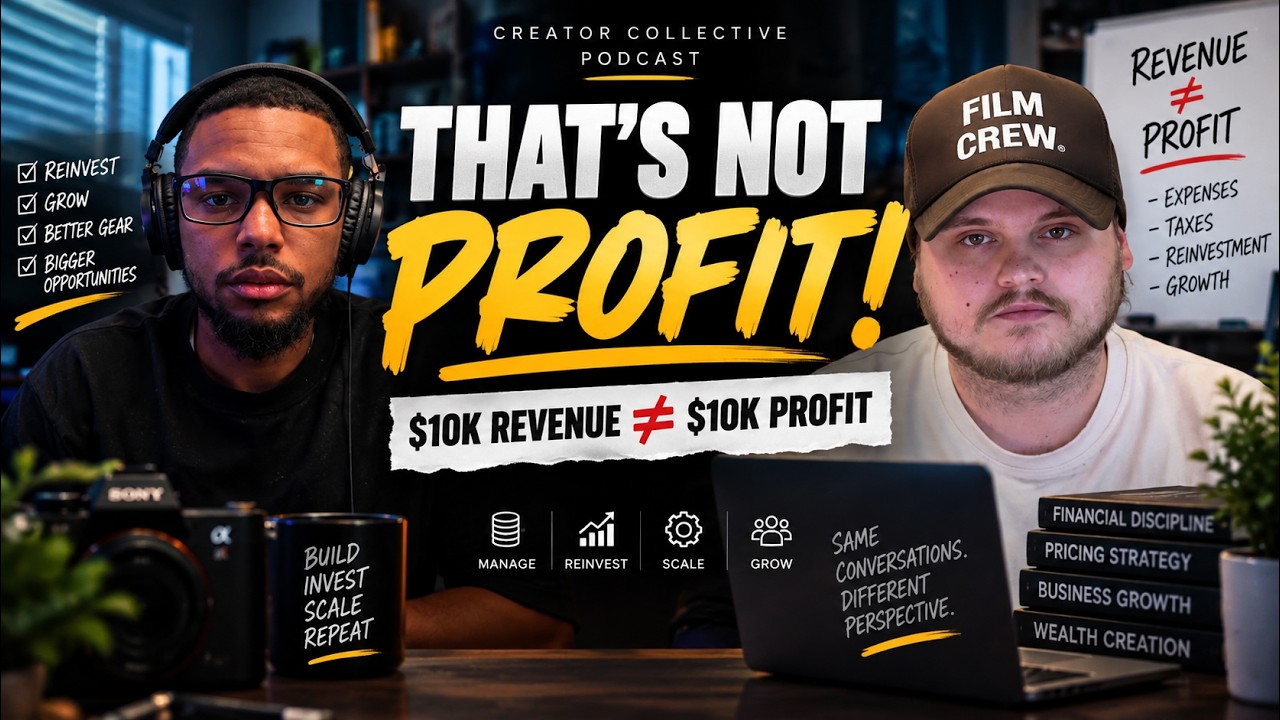
A $10,000 invoice feels like a finished win. It is not. It is revenue, and revenue is only the top of the story. Profit is what remains after the shoot, the edit, the tax, the software, the drive that failed, and the quiet week that still has rent. Creators who track the first number and ignore the second stay busy and broke. This is the distinction Cody Cochran and JB keep returning to on Creator Collective: the goal is not to make more money. The goal is to build a business with the money you make.
Divide the payment before you celebrate it
When the transfer lands, split it on paper the same day. One share is the cost of doing that job: crew, mileage, music, color, hard drives, and the hours you still owe. One share is tax, because the government does not care that you already spent the deposit. One share is pay, and it should be a number you can live on without raiding the business. One share goes back into the company: savings, a better light, a subcontracted editor, a month of overhead. If you cannot name the four shares, the invoice is still a feeling.
Cochran Films runs the studio the same way. A production is not done when the client says the cut is beautiful. It is done when the files are delivered, the books can explain the job, and the next month is not depending on a miracle. The essay on what an in-house hire actually costs is the buyer’s version of this math. Creators should know it from the inside.
Price for the business, not for the flinch
Underpricing is how a full calendar produces an empty account. If the quote only covers the shoot day, every revision, every export, and every “quick favor” is unpaid labor. Charge enough that a normal job leaves margin. Margin is not greed. Margin is the reserve that lets you say no to a bad fit and yes to a bigger room when it shows up. A creator who spends every dollar of revenue has no way to take the opportunity that requires a plane ticket, a second body, or a quiet month of building.
The invoice is not the business. The business is what you refuse to spend before the next job exists.
Reinvest small profits on purpose
Reinvestment does not start at six figures. It starts with the first job that clears its costs. Put a fixed percent aside even when the number looks silly. That account is what separates a freelancer who panics in January from a studio that can wait for the right client. Partners need the rule in writing too. If two people share the work and only one of them saves, the company is a friendship with a logo. Decide the split, the reserve, and who can spend the reserve before the money arrives.
Practical takeaways
- Call revenue and profit by their real names. Do not post the gross as if it were pay.
- Split every client payment the day it lands: job cost, tax, pay, and reinvestment.
- Raise the price until a normal job leaves margin. Discounting until you are tired is not a strategy.
- Keep a reserve so a slow month or a bigger opportunity does not require panic.
- If you have a partner, write the money rules down before the next invoice.
A direct next step
Watch the episode, then open the last three invoices and write the four shares next to each one. If the reinvestment line is zero, that is the work. Creator Collective keeps the conversation in the room with other creators. The operating side of that lesson, for brands who want one studio instead of a pile of handoffs, lives on the systems side of Cochran Films.
Tags: profit, revenue, creator finances, pricing, reinvestment